Tuesday, July 2, 2013
Tuesday, June 25, 2013
Music and Memorial Day
| Photo credit: Kimberly G. |
Why Memorial Day? What are remembering? Many things; Providences of God, our history etc. Keeping in mind that one of the foremost reasons we have Memorial Day, is for saying thank you to those who have died in the past for our liberty, as well as for the Christian Faith, the words to The Lord Shall Supply My Need seemed fitting for the day.
I can imagine that these words might have given great comfort to those Christians fighting in the battlefield, as well as those facing the burning stake.
My Lord Shall Supply Thy Need
My Shepherd will supply my need: Jehovah is His name;
In pastures fresh He makes me feed, Beside the living stream.
He brings my wandering spirit back When I forsake His ways,
And leads me, for His mercy's sake, In paths of truth and grace.
When I walk through the shades of death His presence is my stay;
One word of His supporting grace Drives all my fears away.
His hand, in sight of all my foes, Doth still my table spread;
My cup with blessings overflows, His oil anoints my head.
The sure provisions of my God Attend me all my days;
O may Thy house be my abode, And all my work be praise.
There would I find a settled rest, While others go and come;
No more a stranger, nor a guest, But like a child at home.
Psalm 23, paraphrased
Isaac Watts, 1674-1748
Posting topics for July
Come back in July to read about:
- Pentatonic Music
- What Leonard Bernstein thought about J.S. Bach
- Eleganza Strings Studio Recital
- A wedding at Cheekwood Botanical Gardens
Thursday, June 20, 2013
Ag and Arts Tour 2013

A few weeks ago, we spent two whole days at Leegacy Farm, playing live harp and violin music for the 2nd. Annual Arts and Ag Tour. We played a collection of Scottish, Irish, Folk, Sacred and Classical selections. The West ladies also joined the team at Leegacy Farm for the two days. It was enjoyable to listen to their great toe tapping music when we were on break. Fried pies, lemonade, and plenty of handmade items were in abundance......
![]() |
| We were situated under a canopy by a trickling waterfall....so relaxing! |
![]() |
| Arts and Ag Tour , here we come |
![]() |
| Rocking chairs in abundance, as well as a porch swing ( my personal favorite ) |
![]() |
| There were rabbits for sale |
![]() |
| West ladies booth |
Thursday, June 13, 2013
A Book Review-- Why Johnny Can't Sing Hymns by: T. David Gordon
My concluding thoughts on Why Johnny Can't Sing Hymns are as follows:
I agree with Gordon in that we should care about singing appropriate music to God on Sundays ( and every day ). And certainly we must encourage others to care about singing the good old hymns, but I think for those of us who have studied music, and have been convicted about singing theologically sound worship music ( the Trinity hymnal for example ), must be careful that we don't look down our noses in a very arrogant and prideful way because we think we're "more godly". We must remember that it's only by the grace of God that we know what we know, its nothing we've done or deserved.
When we share our thoughts and convictions on Hymnody, it should be out of true love for the brethren and fear of God. Soli Deo Gloria, this is what it's all about.
Gordon addresses the issue of worship music in a very gentle and sensitive way, and he is by no means condemning of others or haughty in his approach of the subject. May we all learn from his example.
-Hannah
“We've lost our capacity for the sublime, and have acclimated ourselves to the mundane even to the point that we are not troubled when worship itself is mundane. We don't deny per se that worship has something to do with the sacred; we've lost the category of sacred itself.”
-T. David Gordon
I agree with Gordon in that we should care about singing appropriate music to God on Sundays ( and every day ). And certainly we must encourage others to care about singing the good old hymns, but I think for those of us who have studied music, and have been convicted about singing theologically sound worship music ( the Trinity hymnal for example ), must be careful that we don't look down our noses in a very arrogant and prideful way because we think we're "more godly". We must remember that it's only by the grace of God that we know what we know, its nothing we've done or deserved.
When we share our thoughts and convictions on Hymnody, it should be out of true love for the brethren and fear of God. Soli Deo Gloria, this is what it's all about.
Gordon addresses the issue of worship music in a very gentle and sensitive way, and he is by no means condemning of others or haughty in his approach of the subject. May we all learn from his example.
-Hannah
Why Johnny Can't Sing Hymns
Written by: T. David Gordon
Reviewed by: Hannah DeLadurantey
Gordon's purpose in writing this book:
- Prove that music in worship is significant, and that we should take more care finding out more about it.
- How to evaluate worship music
- Find out why hymns are unpopular in our culture, and if it is a problem, how to help cure it
Why Is Music Significant?
“ Music may be religious or profane,
sublime or mundane, pious or pernicious, but music is not
insignificant. It would not be a universal reality in all cultures if
it were insignificant.”
In the first chapter or so, Gordon
defends why God cares about worship music. As the reader, your taken
on a journey to the Old Testament, where Gordon gives scripture
references to allow you, the reader, perspective into how important God's
place of worship was (the Temple). Gordon goes on to explain that
if God took so much time and detail to explain how He wanted the
Temple to look, wouldn't He care very much on what type of music was
sung and played for the worship of Himself? Indeed He does care.
How does music affect us and do
we have to evaluate it?
“ Like
worship, music is a reality that involves us emotionally and
sometimes deeply, and therefore it is difficult for us to establish
the philosophical distance necessary to evaluate it on aesthetic or
musical grounds. Worship music, then, is almost hopelessly impossible
to discuss because it combines the passion we feel about worship with
the passion we feel about music, and the whole enterprise becomes so
fraught with emotion that philosophical distance is extremely
difficult for most to acquire. Nonetheless, it is our duty, once we
raise the subject, to do the best we can to evaluate it with all the
resources available to us. ”
How to Evaluate a Hymn/Worship
Music
Hymn Criteria
- theologically orthodox lyrics
- theologically significant lyrics
- literary apt and thoughtful lyrics
- lyrics and music appropriate to a meeting between God and his visible people
- well-written music with regard to melody, harmony, rhythm, and form.
- musical setting appropriate to the lyrical content
*Historical note: the
Trinity Hymnal mentions the goal of compiling a hymnal that has three
traits: “truly ecumenical...theocentric in orientation, biblical
content”
- “ Study the psalms and ask whether, on lyrical grounds, the various form of contemporary worship music demonstrates anything like the theological or literary integrity or profundity of the individual psalms.”
Gordon presses the point that all
things are lawful, but not all things are helpful (1 Corinthians
10:23 ). This he says; “is an important point to remember when
evaluating worship music.” Is it helpful, is it appropriate? Gordon
also points out that when making decisions on worship music, there
must be a reason and some type of rationale for determining, for
certain purposes, why one hymn/song is superior over another.
Gordon also lists 5 properties from
Aaron Copland's book on music. Gordon says that all composers of
music must make skillful choices with them: rhythm, melody, harmony,
timbre, and form.
Gordon poses this question to get us thinking ( in regards to
pop music in comparison to the psalms ): Do our popular tunes and
words have the same effect on us as the psalms of the Bible?
Aesthetics
“ God Himself is our aesthetic
standard, just as He is our ethical standard.......Human creativity
is a matter of imitating God the Creator; it may very well be the
most significant thing humans do, so it is not ' merely anything ',
and it is surely not 'merely a matter of taste.' ”
Meta
Messages/Form and Content
Gordon, in his chapter on Meta Messages, challenges us to
think about worship songs/popular hymns. Do the lyrics go with the
tunes? Gordon goes further on to exhort believers that Christianity
is a demanding religion, it is sacred, that is, not common. Our words
must match our actions just as the lyrics of our music must be paired
with fitting tunes.
“ ...if even the substantial minority
of the culture associates contemporary music with the trivial, the
inconsequential, or the ironic, why would the church wish to use a
form associated with the trivial or ironic, and employ it for
worship? Is the content of worship trivial or ironic? And if not,
then why attempt to put serious content into a non-serious form?
People may be amused by it, and some may tap their feet to it, but
would Jesus have addressed the rich young man in such a tone? ”
“ We might say, for instance, that we
take God and faith seriously, but do things that seem contrary to
that message......and if the culture observers are correct, the
meta-message that contemporary music sends it this: Nothing is
important everything is just amusing or entertaining. This is hardly
a Christian message.”
Music Genres
Gordon explained a few components of
music genres (their pros. and cons.). Gordon's leanings on worship music are more towards the folk genre, mostly because its music is more accessible to
people.
- High/Classical: multigenerational, timeless, speaks to significant matters, communal, restrained, disciplined ( Matt. 7:14 )
- Folk:transcendent, multigenerational, significant, communal/ yet more accessible then Classical.
- Popular: immanent, banal, individualistic, accessible, idiosyncratic.
Conclusion
In the end, Gordon concludes that a
change is needed in the church concerning its worship music, but that
it must be a slow change. People are set in their ways, and just have
not been taught what it good music. It must be a humble, slow
explanation and change that will bring our churches back around to
good biblical singing, not a thump on the head with the Trinity as
you quickly snatch away the slide projector.
“We've lost our capacity for the sublime, and have acclimated ourselves to the mundane even to the point that we are not troubled when worship itself is mundane. We don't deny per se that worship has something to do with the sacred; we've lost the category of sacred itself.”
-T. David Gordon
Saturday, June 1, 2013
Bernstein on Musical Analysis
“ Meaning” in music has preoccupied
aestheticians, musicians, and philosophers for centuries. The
treatises pile up, and usually succeed only in adding more words to an
already obscure business. In all this mass of material we can discern
four levels of meaning in music:
- Narrative-literary meanings ( Till Euenspeigal, The Sorcerer's Apprentice, etc. )
- Atmospheric-pictorial meanings ( La Mer, Pictures of an Exhibitions, etc. )
- Affective-reactive meanings such as triumph, pain, wistfulness, regret, cheerfulness, melancholy, apprehensions—most typical of nineteenth-century romanticism.
- Purely musical meanings.
Of these, the last is the only
one worthy of musical analysis. The first three may involve
associations which are good to know (if the composer intended them);
otherwise they are concerned only with arbitrary justification, or
prettifying for the commercial reasons mentioned before. If we are to
try to “explain” music, we must explain the music, not
the whole array of appreciators' extra musical notions which have
grown like parasites around it.
Which makes musical analysis for
the layman extremely difficult. Obviously we can't use musical terminology exclusively, or we will simply drive the victim away. We
must have intermittent recourse to certain extra-musical ideas, like
religion, or social factors, or historical forces, which may have
influenced music. We don't ever talk down; but how up can we
talk without losing contact? There is a happy medium somewhere
between the music-appreciation racket and purely technical
discussion; it is hard to find, but it can be found.
All excerpts were taken from The Joy of Music by: Leonard Bernstein
Wednesday, May 29, 2013
Bernstein and Beethoven
".....the inexplicable ability to know what the next note has to be. Beethoven had this gift in the degree that leaves them ( other composers ) all panting in the rear guard."
" Form is only an empty word, a shell, without this gift of inevitability; a composer can write a string of perfectly molded sonata-allegro movements, with every rule obeyed, and still suffer from bad form. Beethoven broke all the rules, and turned out pieces of breath-taking rightness. Rightness--that's the word! When you get the feeling that whatever note succeeds the last is the only possible note that can rightly happen at that instant, in the context, then chances are your listening to Beethoven. "
- Leonard Bernstein
" Form is only an empty word, a shell, without this gift of inevitability; a composer can write a string of perfectly molded sonata-allegro movements, with every rule obeyed, and still suffer from bad form. Beethoven broke all the rules, and turned out pieces of breath-taking rightness. Rightness--that's the word! When you get the feeling that whatever note succeeds the last is the only possible note that can rightly happen at that instant, in the context, then chances are your listening to Beethoven. "
- Leonard Bernstein
Wednesday, May 22, 2013
The Joy of Music by: Leonard Bernstein
The Joy of Music by: Leonard
Bernstein
A few months ago, I went to a library
sale and spied a book titled The Joy of Music. Any book with the theme of music always catches my eye, and to see
the name Leonard Bernstein connected with it meant I must peruse and likely
purchase.....and so I did.
There were a few
sections that I didn't care to read, like the one on Jazz, and a few
words that I blackened out, but over all I think it was worth the
$2.00.
The Joy of Music
was originally supposed to be entitled: Conversations at Thirty,
but
since it was written by the time Bernstein was around 40 ( 1959 ),
the titled changed to The
Joy of Music.
The chapters in this book were taken from television and radio shows,
so they are conversational style, with lots of musical notation since
you can't actually hear the musical excerpts.

The Art
of
Conducting
Telecast: December 4, 1955
Bernstein, in this chapter: dissolves any confusion as to
the role of the modern day conductor, gives a little history of the
modern day conductor, explains what exactly a conductor does, and
shows with words and pictures how to beat out the music with a baton.
History
of the Conductor:
" Mendelssohn was the first real conductor in our sense of
the word, who founded the tradition of conducting with a wooden
stick/baton. Mendelssohn dedicated himself to an exact relication of
the score he was conducting, through manipulation of the baton. There
soon arrived, however, a great dissenter; Richard Wagner, who said Mendelssohn was doing it all wrong, and that a conductor should
personalize the score he was conducting by coloring it with his own
emotions and his own creative impulse. And so, out of the clash of
these two points of view the history of conducting was born. Mendelssohn fathered the 'elegant' school and Wagner inspired the 'passionate' school of conducting."
Bernstein goes on to explain that both schools of
conducting are needed; the ideal modern conductor is a synthesis of
the two attitudes, and this synthesis is rarely achieved. “ Almost
any musician can be a conductor, even a pretty good one; but only a
rare musician can be a great one.”
Bernstein also expounds on why we have conductors now;
“because the orchestra is bigger than it used to be, and its harder
to keep everyone together rhythmically and musically.” A leader was
needed and so the conductor was born! The modern day conductor has
only been around for the last 200 years or so.
What
do you have to be, to become a Great Conductor?
- Must have enormous authority
- Master the mechanics of conducting
- Inconceivable amount of knowledge
- Profound perception of the inner meanings of music
- Uncanny powers of communication
How
to Look at a Music Score
- “Read through the score more or less superficially, like racing through a detective story. During this first reading, he must form his own opinion of the cultural and stylistic position of the work. E.g. style of Brahms period; atmosphere of his life and country; the goal he set himself in his work; the influence of other composers and artists on him. In other words, a conductor must be more than a musician he must be also a kind of artistic historian.”
- Take the score apart and study all aspects of it; what instruments are playing, where is the melody.
- Decide how fast it must go
- How loud?
What
Makes a Great Conductor
Bernstein says he believes that the chief element in
the conductors technique of communication is; preparation. Everything
must be shown to the orchestra before it happens. Once the player is
playing the note, its too late. The conductor must always be a beat
or two ahead of the orchestra. He must hear two things at the same
time: what the players are doing at any moment, and what they are
about to do a moment later. Therefore, the basic trick is in the
preparatory upbeat. The preparatory upbeat is exactly like breathing.
The preparatory beat is like inhalation, and the music sounds as an
exhalation. A conductor who breathes with the music has gone far in
acquiring a technique.
“ But the conductor must not only make his orchestra play. He must make them want to play. He must exalt them, lift them,
start their adrenalin pouring, either through cajoling or demanding
or *raging. But however he does it, he must make the orchestra love
the music as he loves it. It is not so much imposing his will on them
like a dictator; it is more like projecting his feelings around him
so that they reach the last man in the second violin section. And
when this happens—then there is a human identity of feeling that
has no equal elsewhere. *It is the closet thing I know to love
itself. On this current of love the conductor can communicate at the
deepest levels with his players, and ultimately with his audience. He
may shout and **rant and **insult his players at rehearsal--as some
of our greatest conductors are famous for doing—but if there is
this love, the conductor and his orchestra will remain knit together
through it all and function as one.”
“ Well, there is our ideal conductor. And perhaps the
chief requirement of all is that he be humble before the composer (
and I would personally add, God ); that he never interpose himself between the
music and the audience; that all his efforts, however strenuous or
glamorous, be made in the service of the composer's meaning-- the
music itself, which, after all, is the whole reason for the
conductor's existence.”
*I don't agree with this statement completely, but I understand what he's trying to get across. I suppose that if you weren't a believer that this "feeling" could be the closest thing to love......
** Don't agree that its okay to rage just to get what you want
*** Or with the rant and insult
Labels:
book review,
conducting,
leonard bernstein,
music history
Tuesday, May 14, 2013
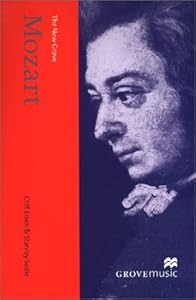
A Book Review: The New Grove Mozart
The
New Grove MOZART
Written by: Stanley Sadie
Reviewed by: Hannah DeLadurantey
We picked up this book at a library
sale a few years back, and I just got around to reading it!
Sadie takes us back to the year 1756,
the year Wolfgang Amadeus Mozart was born. This book is divided into
24 chapters, with each chapter focusing on where Mozart would have
been and what he composed during those specific years.
Overall, this book was very detailed
and helpful if you wanted to know more specifically where and when
Mozart composed certain works. Personally, I found the writing style
a bit dry, mostly dates and facts. Mozart didn't seem real, but instead, a stuffy dry man of dates and
facts. I would have liked to be transported into the 1700's, but was
sadly disappointed.
If your looking for a good informative
and intriguing story of Mozart, don't pick up this book. But, if you
in need to details on his works, be sure to read a copy of The New
Grove Mozart
Friday, April 26, 2013
A Texas Wedding
Esther and I had the great delight of traveling to Texas last weekend for a friends wedding. And to top it off we were asked to play their ceremony music! What a joy it is to bless others with the gift God has given us, we were more than delighted to oblige both our dear friends. And since we used to live in Texas, quite a few of our friends were there, its always wonderful to catch up with familiar faces!
It was such and encouragement to witness
a godly wedding that sought to honor parents and glorify God.
It was such and encouragement to witness
a godly wedding that sought to honor parents and glorify God.
The bride had a recital before the rehearsal dinner where various musicians performed for the wedding party and other family members and friends that were there. Esther and I decided to play one of the bride's favorite pieces; Pavane by Ravel. We must agree that she has good taste since we LOVE this piece as well!
![]() |
| Here we are enjoying the pretty outdoors where the reception was to be held. |
The Wedding Facility was very Elegant and Soothing
![]() |
| Simple Elegance |
![]() |
| A gazebo decorated an area of the lawn. |
![]() |
| This was the backdrop for bride and groom during the ceremony. |
![]() |
| Beautiful, feminine dresses were worn by the ladies and girls, and manly classic black suits by the men. |
![]() |
| This area was so creative and peaceful; shaded yet outside. |
![]() |
| Here is the Chapel. The sparkling chandeliers and light colored flowers were flowing, lovely and pure looking. |
Wednesday, April 24, 2013
Tips for Becoming a Better Performer
Performance
Some love it, others hate it. Some thrive on and live for it and others shrink from it in terror.
I used to be somewhere nearer the shrinking from it in
terror, but now I think I’m somewhere in the middle of both spectrum's. This is
due to a few resources as well as some fabulous teachers I've had the privilege of reading/ studying with.
~Hannah
Power Performance:
A few years back one of my harp teachers lent me a book called Power Performance by: Carrol McLaughlin. Though I don’t agree
100% with Carrol McLaughlin (in some of her psychology , I believe she has some really good tips on how to
become a better performer and great insight on how to conquer your stage fright
fears. I’m not planning on going in-depth into McLaughlin’s book, but instead I'll just mention a few of highlights
that helped me.
1
1. Practice in different environments once you get
closer to your performance date: living room, bedroom etc.
2
2. Practice your concert repertoire in order,
non-stop, multiple times at least that last month before your recital/concert.
3
3. Play and perform as many times as you can, in
front of an audience (big or small) at least a month before your recital:
Nursing Homes, House Concert, the dog, friends etc.
4
4. Trust that you've put the work in and that your mind and
muscles know what to do. Don’t doubt yourself; stay confident.
5
5. Practice your music in different sections, from
memory. Try to see the music in your mind when away from your instrument. Sing
your music from memory. Practice away from the instrument by reading through
your music.
Three years ago I had the blessing of being able to attend
an annual AHS Conference in Denton Texas. While I was there, I listened to a talk
on performance. Here are the few tips I gathered and have tried to implement
into my performances since:
How to Enter the Stage and Begin Playing:
1. When entering the stage, walk with confidence, head held high,
smiling! No grinning, but look pleasant, your audience wants to know that you
are excited and happy to be playing for them!
2. Okay, you've bowed ( don't bow too low or too shallow and please don't look at the audience while your bowing! ); now sit down. While remaining
pleasant looking (no grins, or teeth need to be shown), pull your harp back to
your shoulder, dampen the strings with hands and change your pedals. Now is the
part many people don’t think about; look up while doing this. When a person
looks down, it comes across to the audience that you are not confident and that
you are being introspective. Looking up portrays confidence, which will set
your audience at ease.
3. Your pedals are set (or for other instrumentalists, you've picked up your instrument). Give yourself a few seconds to collect your
thoughts and FOCUS. Remember what you are trying to portray in the beginning
lines so your know how to attack the first notes, now your ready play.
Gleanings from
Personal Experience
/Insight from My Music Instructors:
Though I am not the most famous of performers, I thought I’d
share some personal performance helps that have helped me immensely.
1. Focus was huge for me. Blocking out all that is around me
and imagining that I’m in my own practice room at home, and it’s just me and my
harp playing as unto the Lord, for His glory alone. I've found that as soon
as my focus is gone for a few seconds, a mistake is made or my muscle memory
will take over and that definitely can throw you into a tailspin! Remembering to stay confident, trusting in the fact that I've put in the practice and that God will bless my efforts as He sees fit.
2. Always practice your “performance” in the clothes you are
going to actually perform in; shoes, clothes (hair style for ladies). It is
easy to get distracted by a piece of hair in your face, or the shoulder seam in
your top that's more restricting than the t-shirt you normally practice in.
3. I think that the biggest thing that has helped me perform
better has been keeping always in
mind that the music I am performing is for God. If I am playing for my glory,
this is pride and selfishness both of which are sins and very grievous to God.
For God alone should receive glory and honor and it is only by His grace that I
am able to play. My playing should point to Christ and the work He has done in
me, and not to my “talented abilities”.
4. Lastly, relax and enjoy this moment! Remember that a
performance is only once, do your best and enjoy this gift of music God has given us!
To the only wise God our Saviour, be glory and majesty, dominion and power, both now and ever. Amen
Jude 1:25
I can do all things through Christ which strengtheneth me.
Philippians 4:13
Labels:
AHS,
performance,
playing for God's glory,
Power Performance
Saturday, April 20, 2013
A Book Review: Mr. Pipes and Psalms and Hymns of the Reformation
Mr. Pipes and
Psalms and Hymns of the Reformation
Second book in the Mr.
Pipes series by: Douglas Bond
Written by: Douglas Bond
Illustrations by: Ron Harris
Reviewed by: Hannah DeLadurantey
In Douglas Bond’s first book, Mr. Pipes and the British
Hymn Makers, Mr. Pipes, a devout Christian living in England, evangelizes
to two young American children who are summer vacationing in England, named;
Annie and Drew. After Annie and Drew go back to their home in America, Mr.
Pipes continues to develop his relationship with the two youngsters by sending
them hymns to learn and thoughts to ponder. As you may gather from the titles
from Bonds Mr. Pipes series, Mr. Pipe’s, Annie and Drew develop a budding
relationship over hymnody and psalmody that only blooms more deeply in this
second volume entitled; Mr. Pipes and
Psalms and Hymns of the Reformation.
This book exudes the power and majesty of hymns in a very
easy, delightful, and creative way, which is perfect since it was written for
young readers!
Bond interweaves very artfully, the tales of many hymn
writers while Pipes, Annie and Drew tour Europe. The book is divided up into 12
chapters, where 10 out the 12 chapters focus on a different Reformation hymn
writer; Luther, Nicolai, Altenburg, Heermann, Gerhardt, Franck, Neander,
Rinkart, Schutz, and Calvin.
But, Bond does not stop there! Instead, he craft fully adds
other dimensions to the story by weaving in various historical and
architectural discoveries that Pipes shares with Annie and Drew. E.g. History
of Westminster Abbey, purpose behind Gothic Architecture etc.
And not to forget mentioning that you can practice reading
your French and German in Bond’s book, since Pipes speaks both languages in
various occasions while touring outside of England…..A Dieu!
There were a few small words, references and phrases I wished
Bond would have left out; fairy tales and eye rolling were mentioned twice,
“what a bummer”, “ what on
earth are you doing?” dirty rotten thief, creeps and cabbage head as well as
kraut breath are words used to address two bully’s that are throwing rocks at
Pipes Annie and Drew. Drew is gently reprimanded for using the ungodly language
when Pipes reads a hymn that addresses our language, so that is good, and Drew
does repent of his ungodly speech, but I’d still rather not have that type of
language in a book for children. We’re sinners enough, we don’t need any other
words and phrases added to our mental vocabulary, even if we do know they are
bad. You never know when they might come out!
Thursday, April 18, 2013
Eleganza Strings Blog in 2013
Dear Readers,
Some of you may be curious, wondering
why there has been such a plethora of updates this month.
If you've looked back in our archives,
you'll see a difference in the type of posts I've been updating with,
and the reason is two fold:
First, I have a more relaxed practice
schedule this year, so I'm able to spend more time discovering other
aspects of music.
Second, I greatly enjoy reading,
writing and researching the glorious art God has given to us; music.
So, due to the lack of practice hours I need to put in this year, I
have the great delight of being able to devote more time to areas
such as these!
There is one other reason I'll be
updating, and this is the most important reason of all.
It's not to attract more traffic to
this site so as to drum up more clients, but instead to speak Truth
and point to God, the Creator of Music. My prayer is that this years
posts with broaden my knowledge of music, and my fear of the Lord.
Here are a few topics in 2013 that I'm
planning on exploring on this site:
- Write Book Reviews (that concern music in some way),
- Research Various Aspects of Music such as; Performance, Teaching, Practice Habits, Music History
- Record any Music Performances Eleganza Strings may have.
You may also see a detour or two along
the way, and find a post or two Psalmody, Hymnody, Composition and
Arranging.
I pray that you'll enjoy reading the
writing on this blog as much as I'll enjoy writing it!
Soli Deo Gloria,
Hannah for Eleganza Strings
Tuesday, April 16, 2013
New Repertoire List!
I finally got around to compiling a nearly completed list of our music repertoire!
Visit the Wedding/Event Repertoire page for the completed list.
-Hannah
Processionals
Dodi Li ( I Am My Beloved's )
Hodaya
Al Kol Eleh ( The Bitter and the Sweet )
L'kha Dodi
Hana'ava Babanot
Recessionals
Hevenu Shalon Alekhem ( Peace Be Unto You )
Mitzva G'dola ( Hassidic song of praise )
Od Yishoma
Artza Alinu
Bashana Haba'ah
Sacred Duo
Be Thou My Vision
For the Beauty of the Earth
Be Still My Soul by Sibelius
Amazing Grace
Like A River Glorious
The Church is One Foundation
The Lord's Prayer
Slane/Be Thou My Vision (an old folk melody)
The Water is Wide/When I Survey The Wondrous Cross (an English folk song)
Savior Like a Shepherd Lead Us
Blessed Assurance Knapp
Time to Say Goodbye by Quarantotto, Peterson, Saratori
Traumerei by Schumann
Prayer by Foster and Bayer
Hymne by Vangelis
Air (on the G String) by J.S. Bach
The Swan by Saint Saens
Celtic Duo
Traditional Irish:
Danny Boy
Star of the County Down
Rights of man
Carrickfergus
The Butterfly
Tripping Up the Stairs
Larry O'Gaff
Garret Barry's Jig
Ships are Sailing
Wind that Shakes the Barley
Traditional Scottish:
Ye Banks and Braes
Flow Gently, Sweet Afton
John Anderson, My Jo
Mingulay Boat Song
Mairi's Wedding
Lochaber No More
Flower of Edinburgh
Glenlivet
Willafjord
Sacred Harp Solo
Be Still My Soul by Sibelius
Amazing Grace
The Lord's Prayer
Slane/Be Thou My Vision (an old folk melody)
The Water is Wide/When I Survey The Wondrous Cross (an English folk song)
Savior Like a Shepherd Lead Us
Blessed Assurance Knapp
The Old Rugged Cross by Bennard
It is Well with My Soul by Bliss
Come, Thou Fount of Every Blessing
What a Friend We Have in Jesus
Classical Harp Solo ( opera, classical, baroque, romatic, modern )
Visit the Wedding/Event Repertoire page for the completed list.
-Hannah
Jewish Wedding Repertoire
Processionals
Dodi Li ( I Am My Beloved's )
Hodaya
Al Kol Eleh ( The Bitter and the Sweet )
L'kha Dodi
Hana'ava Babanot
Recessionals
Hevenu Shalon Alekhem ( Peace Be Unto You )
Mitzva G'dola ( Hassidic song of praise )
Od Yishoma
Artza Alinu
Bashana Haba'ah
Other Repertoire
Sacred Duo
Be Thou My Vision
For the Beauty of the Earth
Be Still My Soul by Sibelius
Amazing Grace
Like A River Glorious
The Church is One Foundation
The Lord's Prayer
Slane/Be Thou My Vision (an old folk melody)
The Water is Wide/When I Survey The Wondrous Cross (an English folk song)
Savior Like a Shepherd Lead Us
Blessed Assurance Knapp
Classical Duo
Meditation from Thais by MassenetTime to Say Goodbye by Quarantotto, Peterson, Saratori
Traumerei by Schumann
Prayer by Foster and Bayer
Hymne by Vangelis
Hornpipe by Purcell
How Beautiful by Twila Paris
Largo: Winter, Opus 8, No.4 by Vilvaldi
Sheep May Safely Graze by J.S. BachAir (on the G String) by J.S. Bach
The Swan by Saint Saens
Celtic Duo
Traditional Irish:
Danny Boy
Star of the County Down
Rights of man
Carrickfergus
The Butterfly
Tripping Up the Stairs
Larry O'Gaff
Garret Barry's Jig
Ships are Sailing
Wind that Shakes the Barley
Traditional Scottish:
Ye Banks and Braes
Flow Gently, Sweet Afton
John Anderson, My Jo
Mingulay Boat Song
Mairi's Wedding
Lochaber No More
Flower of Edinburgh
Glenlivet
Willafjord
Sacred Harp Solo
Be Still My Soul by Sibelius
Amazing Grace
The Lord's Prayer
Slane/Be Thou My Vision (an old folk melody)
The Water is Wide/When I Survey The Wondrous Cross (an English folk song)
Savior Like a Shepherd Lead Us
Blessed Assurance Knapp
The Old Rugged Cross by Bennard
It is Well with My Soul by Bliss
Come, Thou Fount of Every Blessing
What a Friend We Have in Jesus
Classical Harp Solo ( opera, classical, baroque, romatic, modern )
Hornpipe by Purcell
Sheep May Safely Graze by J.S. Bach
Air (on the G String) by J.S. Bach
Ode to Joy by Beethoven
Rondeau ( Theme from Masterpiece Theater) by Mouret
Rigaudon by Daquin
Sinfonia from the Oratorio " Soloman" by G.F. Handel
Gymnopedie No. 1 by Satie
Sheep May Safely Graze by J.S. Bach
Arioso by J.S. Bach
Aria ( Based on " Lascia ch'io pianga, from Rinaldo ) by G.F. Handel
Largo ( from the "New World Symphony" ) by Dvorak
Theme and Variations by J. Haydn
Concerto in B flat Op.4, No.6, HWV 294 by Handel
Sonata in C minor by Pescetti
The Harmonious Blacksmith by Handel
Sonata in G Major by C.P. E. Bach
Theme and Variation by G.F. Handel
Ode to Joy by Beethoven
Rondeau ( Theme from Masterpiece Theater) by Mouret
Rigaudon by Daquin
Sinfonia from the Oratorio " Soloman" by G.F. Handel
Gymnopedie No. 1 by Satie
Sheep May Safely Graze by J.S. Bach
Arioso by J.S. Bach
Aria ( Based on " Lascia ch'io pianga, from Rinaldo ) by G.F. Handel
Largo ( from the "New World Symphony" ) by Dvorak
Theme and Variations by J. Haydn
Concerto in B flat Op.4, No.6, HWV 294 by Handel
Sonata in C minor by Pescetti
The Harmonious Blacksmith by Handel
Sonata in G Major by C.P. E. Bach
Theme and Variation by G.F. Handel
Monday, April 15, 2013
God, the Giver of Good Gifts and Talents: Thoughts by A.W. Tozer
Pride, arrogance, assumption, self righteousness and ungratefulness are all things most musicians battle with. As a musician, it is easy to take for granted the gift or talent we may posses. We can quickly slip into being prideful of our abilities, and forget to give credit to whom it is due; God Almighty.
-Hannah
Thoughts from The Pursuit of God by: A.W. Tozer
"Our gifts and talents should be turned over to Him. They should be recognized for what they are, God's loan to us, and should never be considered in any sense our own. We have no more right to claim credit for special abilities than for blue eyes and and strong muscles."
" It is my own belief that every good and beautiful thing which man has produced in the world has been the result of his faulty and sin-blocked response to the creative Voice sounding over the earth. The moral philosophers who dreamed their high dreams of virtue, the religious thinkers who speculated about God and immortality, the poets and artists who created out of common stuff pure and lasting beauty: how can we explain them? It is not enough to say simply, ' It was genius.'
What then is genius? Could it be that a genius is a man haunted by the speaking Voice, laboring and striving like one possessed to achieve ends which he only vaguely understands? That the great man may have missed God in his labors, that he may even have spoken or written against God does not destroy the idea I am advancing. God's redemptive revelation in Scripture is necessary to saving faith and peace with God. Faith in a risen Savior is necessary if the vague stirrings toward immortality are to bring us to restful and satisfying communion with God. To me this is a plausible explanation of all that is best out of Christ. But you can be a good Christian and not accept my thesis."
-Hannah
"Thou art worthy, O Lord, to receive glory and honour and power: for thou hast created all things, and for thy pleasure they are and were created."
- Revelation 4:11
Thoughts from The Pursuit of God by: A.W. Tozer
"Our gifts and talents should be turned over to Him. They should be recognized for what they are, God's loan to us, and should never be considered in any sense our own. We have no more right to claim credit for special abilities than for blue eyes and and strong muscles."
" It is my own belief that every good and beautiful thing which man has produced in the world has been the result of his faulty and sin-blocked response to the creative Voice sounding over the earth. The moral philosophers who dreamed their high dreams of virtue, the religious thinkers who speculated about God and immortality, the poets and artists who created out of common stuff pure and lasting beauty: how can we explain them? It is not enough to say simply, ' It was genius.'
What then is genius? Could it be that a genius is a man haunted by the speaking Voice, laboring and striving like one possessed to achieve ends which he only vaguely understands? That the great man may have missed God in his labors, that he may even have spoken or written against God does not destroy the idea I am advancing. God's redemptive revelation in Scripture is necessary to saving faith and peace with God. Faith in a risen Savior is necessary if the vague stirrings toward immortality are to bring us to restful and satisfying communion with God. To me this is a plausible explanation of all that is best out of Christ. But you can be a good Christian and not accept my thesis."
James 1:17
"Every good gift and every perfect gift is from above, and cometh down from the Father of lights, with whom is no variableness, neither shadow of turning."
Friday, April 12, 2013
A Book Review: Robert Schumann and Mascot Ziff
Robert Schumann and Mascot Ziff
Written: by Opal Wheeler
Illustrated by: Christine Price
Reviewed by: Hannah DeLadurantey
Overview:
Summery of the life and works of the renowned composer, Robert Schumann, and his cat (Mascot Ziff).
Concerning Content:
In Chapter 1
- There is mention of Schumann telling Ghost Stories. I don't believe this was necessary to move the story along, and Ghost Stories are unbiblical.
In Chapter 3
- Schumann is starving for music and good instruments after he has entered the law, so he enters a music shop and lies to the clerk, telling him that he is there to try out pianos for the Lord of Branburg. But in reality, he's there to play on the pianos to appease his own musical desires. I would not have minded this story if the authoress had explained the wrongness of Schumann's deceitfulness, but instead she said Schumann “laughed at his own musical joke”.
It is never right to wink at sin. God does not wink at our sin and neither should we. For when we disobey God's laws, we threaten the state of where our very souls will spend eternity; Heaven or Hell.
For all have sinned and fallen short of the glory of God- Romans 3:23
Jesus saith unto him, I am the way, the truth, and life: no one cometh to the Father, but by me. - John 14:6
Chapter 4
- “My good fortune!” is exclaimed by Robert because he now has his mothers very longed for blessing and permission to study music instead of the law. The Bible clearly tells us that there is no such thing as “good fortune” All things come from the hand of God.
But he said unto her, Thou speakest as one of the foolish women speaketh. What? shall we receive good at the hand of God, and shall we not receive evil? In all this did not Job sin with his lips. -Job 2:10
Chapter 5
- Fairies are said to have blest Robert and Clara Schumann's new baby girl; Marie. Fairies, like Ghost Stories are only fictitious inventions. It is God who creates and sustains life. Not fairies.
I was cast upon thee from the womb: thou [art] my God from my mother's belly. -Psalm 22:10
Thus saith the LORD that made thee, and formed thee from the womb, [which] will help thee; Fear not, O Jacob, my servant; and thou, Jesurun, whom I have chosen. -Isaiah 44:2
- “Good luck has come to us all”
Again, fortune and luck do not exist, they are “fill in” words created by man, to take away from who really brings good things to us; God, the maker of heaven and earth.
Providence would have been a better word, so I think I'll cross the luck and fortune words out of this book and write in Providence.
Praiseworthy Content:
Chapter 1
- Robert is disrespectful to an elder, and clubs him on his back with a stick. But, it doesn't end there! Robert's father, August, sees this incident, and Robert is duly punished for the unkind act
Chapter 5
- Throughout this whole storybook of Robert Schumann's life, you read of the tension between Mother and Father Schumann's desires for Robert. Father Schumann encouraged his son in music, but Mother Schumann didn't. So, after Father Schumann dies, Mother Schumann requests, with great urgency, that Robert give up music and turn to the law. Robert in response to his mothers request, is shown to have not agreed with his mother's wishes, but willingly puts himself under them and obeys. Later in the story, Robert petitions his mother to allow him to study music once again, and is granted it.
Honor thy Father and Mother which is the first commandment with promise. -Ephesians 6:2
Chapter 4
- Robert's honorableness is asking Mr. Weik permission to marry Clara Weik.
Chapter 5
- Robert Schumann was a very thoughtful man, and multi-generational in his vision. He composed in a very forward thinking and persistent way, all manner of compositions for his collection of; Children's Pieces that were written for his own dear children.
Concluding Thoughts:
Scattered throughout the whole book, Opal Wheeler weaved in various other composers names and concerts that Schumann gave. It was intriguing to see who crossed paths with Schumann, who influenced him and who he influenced.
The beginning mentions Napoleon Bonaparte and a few other political things that would have been going on during Schumann's life. I liked that you got a little bit bigger of a picture of what was going on during that time period and who else was composing music as well.
Like the other book Wheeler wrote on Bach, this book contains lots of abridged compositions that little ones can use to tinker around on the piano.
In the end, Robert Schumann and Mascot Ziff will still find itself on Hannah's bookshelf, give or take a few changes to its typeset:)
Like the other book Wheeler wrote on Bach, this book contains lots of abridged compositions that little ones can use to tinker around on the piano.
In the end, Robert Schumann and Mascot Ziff will still find itself on Hannah's bookshelf, give or take a few changes to its typeset:)
Subscribe to:
Posts (Atom)